Brand Architecture in Crisis: How Austin, Morris, MG, and Triumph Survived British Leyland
 Aug, 28 2026
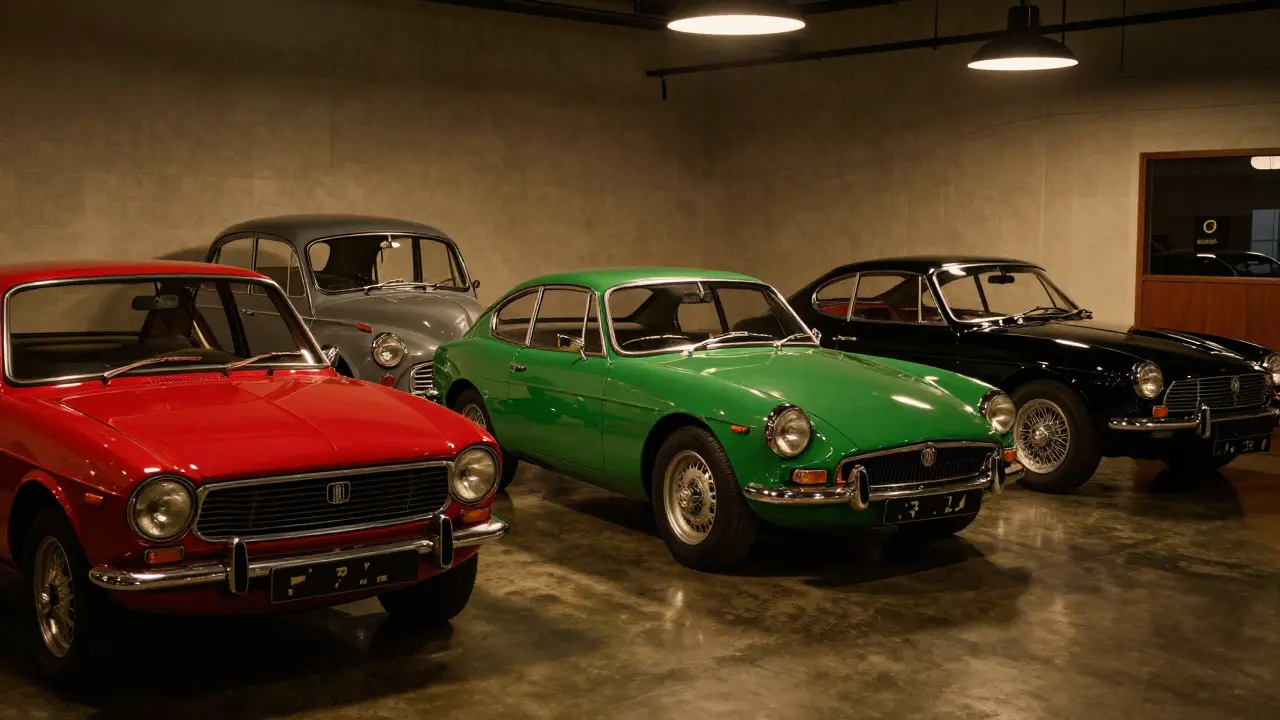
Imagine walking into a dealership in the late 1970s. You see four distinct badges on the wall: Austin, a name synonymous with practical family cars since the early 20th century. Next to it sits Morris, the rugged workhorse of the British motor industry. Then there is MG, the iconic sports car maker known for speed and style. And finally, Triumph, the premium performance brand that competed with European rivals. To a customer, these looked like four different companies with four different identities. But behind the scenes, they were all owned by one massive, struggling entity: British Leyland Motor Corporation (BLMC), or simply British Leyland. This was not just a corporate structure; it was a survival strategy born out of chaos, financial ruin, and political intervention.
The Mess Before the Merger
To understand why BLMC kept these brands separate during its darkest hours, you have to look at what came before. In the 1960s, the UK government pushed for consolidation to stop the "cutthroat" competition that was bleeding smaller manufacturers dry. The result was a series of forced marriages. First, Austin and Morris merged to form British Motor Holdings (BMH). Then, in 1968, BMH merged with Leyland Motors to create BLMC. On paper, this created a giant. In reality, it created a monster with no clear head. The culture clash between the traditional, conservative engineering teams at Austin/Morris and the more aggressive, export-focused mindset of Leyland was immediate and toxic. When the state stepped in to bail out the company in 1975, the brand architecture wasn't redesigned-it was frozen in time. The brands remained because they were the only assets that still had value in the global market.
Why Keep Four Brands? The Strategic Logic
You might ask: if the company was going bankrupt, why not just make one brand? Why keep the overhead of four marketing departments, four sets of dealer networks, and four distinct design languages? The answer lies in brand architecture as a shield against risk. Each brand served a specific demographic and geographic niche that the others couldn't touch easily.
- Austin was the volume seller. It targeted the mass domestic market with affordable, reliable cars like the Austin Maxi and later the Austin Metro. It was the breadwinner.
- Morris shared platforms with Austin but carried a slightly more utilitarian image. It appealed to those who wanted durability over flair, often sharing components to reduce costs while maintaining a separate badge for perceived variety.
- MG was the halo brand. It didn't sell huge volumes, but it sold prestige. The MG MGB and MG Rover kept the dream alive for enthusiasts and secured crucial export revenue to North America and Europe, where the "MG" name still commanded respect despite the parent company's troubles.
- Triumph occupied the premium segment. It aimed higher than MG, competing directly with German and Italian sports cars. While it struggled with quality control, its presence allowed BLMC to claim a foothold in the luxury/performance tier without diluting the mainstream Austin image.
This multi-brand approach allowed BLMC to spread risk. If one brand failed-say, if the Triumph Dolomite became a reputation killer-it didn't necessarily drag down the sales of the Austin Mini. They were siloed in the consumer's mind. This isolation was a double-edged sword: it protected individual brand equity but prevented cross-selling efficiencies.
The Financial Reality: Shared Platforms, Separate Identities
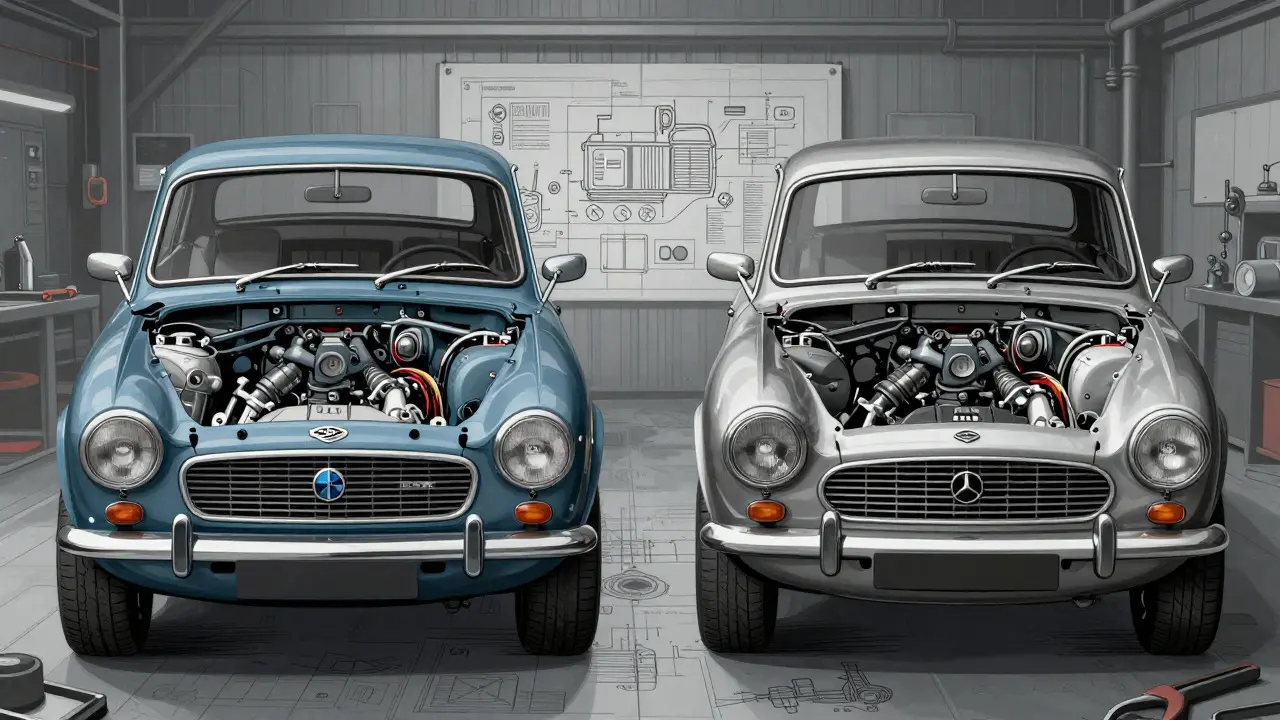
Behind the distinct badges, the engineering reality was grimly pragmatic. Cost-cutting was king. The most famous example of this shared infrastructure is the Minilite platform, which evolved into the Mini and later the Maxi concepts, though the Maxi itself was a standalone failure due to poor execution rather than platform issues. More significantly, the Princess range (which included models from both Austin and Morris) demonstrated how deeply intertwined the two mainstays were. An Austin Princess 3 and a Morris Princess 3 were mechanically identical, differing only in trim levels and badging. This was classic cost-sharing disguised as product diversity. For the consumer, it meant choice. For the engineer, it meant one set of parts to source, test, and maintain. In a crisis, this efficiency was vital. It kept the supply chain manageable when cash flow was tight.
The Dealer Network Dilemma
One of the biggest headaches for BLMC was the dealer network. Dealerships were often local, family-run businesses that had loyal ties to specific brands. A dealer who had built their reputation selling Morris Minis for decades didn't want to suddenly become an Austin specialist, even if the cars were made in the same factory. This fragmentation meant that BLMC couldn't leverage bulk purchasing power for spare parts or unified marketing campaigns effectively. If you bought an Austin, you went to the Austin dealer. If you needed a part that was technically the same as the Morris version, the logistics were handled internally by BLMC, but the customer experience felt disjointed. This lack of integration slowed down service response times and increased inventory costs, further straining the already fragile finances. The brand architecture, while protecting identity, created operational friction that a single-brand strategy would have avoided.
What Happened Next? The Unraveling
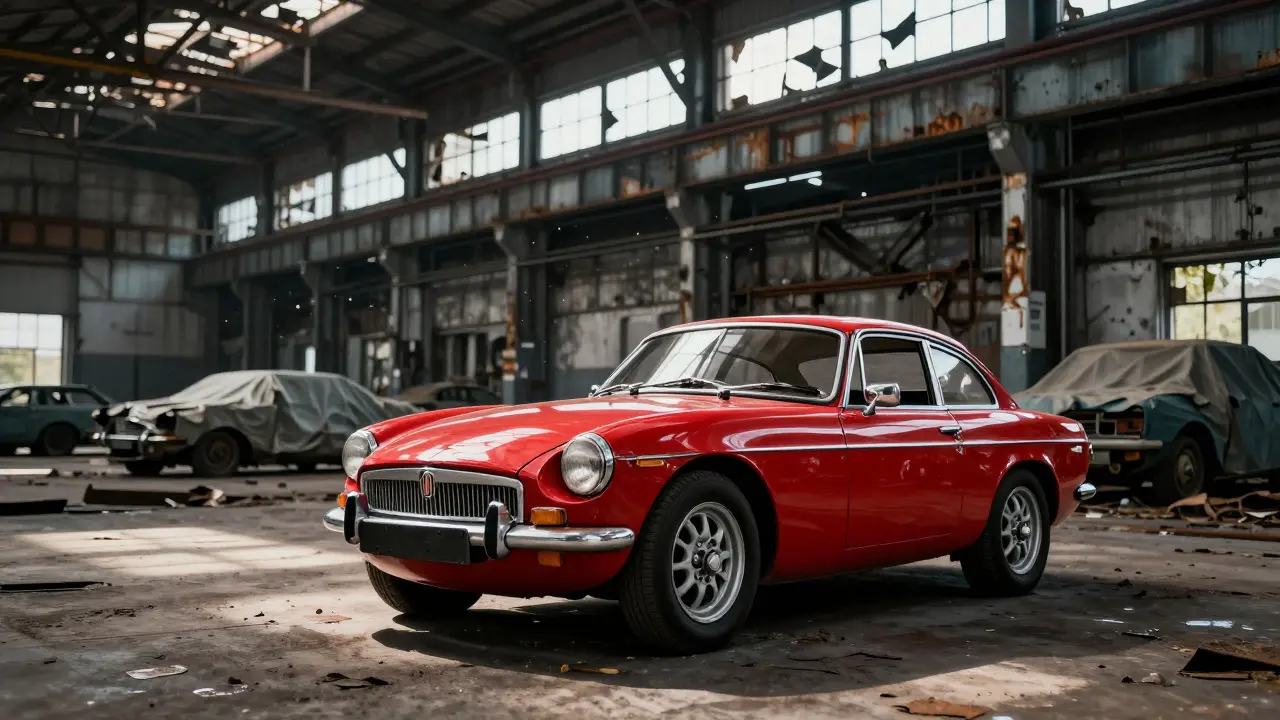
The crisis positioning didn't last forever. By the mid-1980s, the strain was too great. The government realized that keeping four semi-independent brands under one failing roof was unsustainable. The first major split occurred in 1984 when the Rover Group (which included MG) was spun off. This was a critical moment. It acknowledged that MG's heritage was strong enough to stand alone, even if its current products were mediocre. Shortly after, Triumph was effectively absorbed into the Rover brand, with the Triumph name disappearing from new production cars by 1985. The Austin and Morris names lingered a bit longer, eventually fading away entirely by the late 1980s as the company rebranded fully around Rover. The lesson here is stark: brand architecture can save a company in the short term by preserving equity, but if the underlying business model isn't fixed, the brands will eventually be sacrificed or diluted beyond recognition.
Lessons for Modern Automotive Strategy
Looking back at the BLMC era offers valuable insights for today's automakers facing electric vehicle transitions and market consolidation. The core takeaway is that brand separation must align with operational reality. If you share platforms, ensure your brands don't compete directly in the same price bracket unless you have distinct value propositions. MG succeeded in retaining loyalty because it offered something unique (sports heritage) that Austin couldn't replicate. Conversely, trying to make Triumph a premium rival to BMW while sharing cheap parts with Austin led to confusion and distrust. Today, companies like Volkswagen use similar multi-brand strategies (VW, Audi, Skoda, Seat) but with clearer segmentation and more integrated digital platforms. The BLMC case reminds us that without clear strategic intent, brand architecture becomes a bureaucratic nightmare rather than a competitive advantage. It’s not just about having cool logos; it’s about ensuring each logo represents a viable, profitable business unit that contributes to the whole, not just drains resources from it.
Why did British Leyland keep Austin and Morris as separate brands?
They kept them separate to preserve distinct market positions and dealer loyalties. Although they shared many mechanical components, the brands catered to slightly different customer perceptions-one seen as more family-oriented, the other as more utilitarian. This allowed BLMC to maximize coverage in the mass market without cannibalizing sales between the two lines.
Was the MG brand profitable during the British Leyland crisis?
MG was often less profitable in terms of volume but crucial for brand equity and export revenue. Its strong reputation in international markets, particularly North America, helped generate foreign currency and maintain the group's global profile, even when domestic sales were sluggish. It acted as a halo brand, lending prestige to the wider group.
How did the merger affect the quality of the cars?
The merger initially led to inconsistent quality due to cultural clashes and rushed integration of manufacturing processes. However, the pressure to cut costs also drove standardization, which sometimes improved reliability by reducing the number of unique parts. The overall perception of quality suffered in the late 1970s due to labor disputes and investment shortages, affecting all brands equally regardless of their individual reputations.
When did the Triumph brand disappear from new cars?
The Triumph brand was phased out of new production vehicles by 1985. After being absorbed into the Rover Group following the 1984 restructuring, existing Triumph models were rebadged as Rovers, and the nameplate was retired for new models, marking the end of its independent identity under British Leyland ownership.
Did customers know that Austin and Morris were the same company?
Most customers knew they were part of the same larger corporation, especially after the mergers were publicized. However, the day-to-day experience of buying and servicing the cars felt separate due to distinct dealerships and branding. The shared engineering was largely invisible to the average buyer, who focused on the badge and the dealer relationship rather than the corporate structure behind the wheel.