BMC Parts Sharing: How Economies of Scale Shaped Family Car Engineering
 Mar, 30 2026
Imagine walking up to two cars from the same era. They look completely different on the outside, yet underneath, they share nearly half their anatomy. If you pop the hood of a 1960s Austin and open the door of a Morris from the same year, you will likely find matching bolts, hinges, and even windshields. This was not an accident. It was a deliberate financial strategy known as parts sharing. For the British Motor Corporation (BMC), a major UK manufacturer formed from the merger of Austin and Morris in 1952, this approach became the backbone of family car engineering during the post-war boom.
The automotive landscape in Britain changed rapidly after World War II. Families wanted cars, but inflation kept costs high. Automakers faced a choice: build unique components for every model or consolidate resources to lower expenses. BMC chose consolidation aggressively. This decision reshaped the relationship between the buyer and the machine. When manufacturers prioritize production efficiency, the garage experience often changes as much as the road experience. Understanding this shift helps explain why certain classics survive today while others vanished into scrap heaps.
The Genesis of Shared Components
BMC did not invent component commonality, but they mastered it on a national scale. Before the merger, Austin Motor Company and Morris Motors competed fiercely. Once the ownership consolidated under the British Motor Holdings umbrella, competition shifted inward toward internal cost reduction. Engineers were told to design once, manufacture twice. This mandate birthed the "Associated Developments" system, often abbreviated as ADO codes.
You might wonder how complex this coordination required. Each project had a master blueprint that applied across different brands. An ADO16 project meant the chassis, suspension, and body shell could appear in an Austin A40, a Morris 1100, or even a Wolseley variant. The exterior styling remained distinct to satisfy marketing teams who needed visual separation in the showroom, but the underlying structure was identical. This reduced tooling costs significantly. Instead of casting ten thousand molds for five different door hinges, the factory needed molds for just one hinge type used across multiple lines.
This strategy forced a culture of standardization. Mechanics benefited greatly when they learned that a bolt fitting one car fit another. If you drove an older Austin, you knew your local workshop likely carried spare parts for your neighbor's Morris. This interoperability was not always explicitly advertised to consumers, but it created a silent confidence network. Knowing that replacement inventory existed in abundance made purchasing an affordable vehicle less risky for budget-conscious families.
The Legend of the B-Series Engine
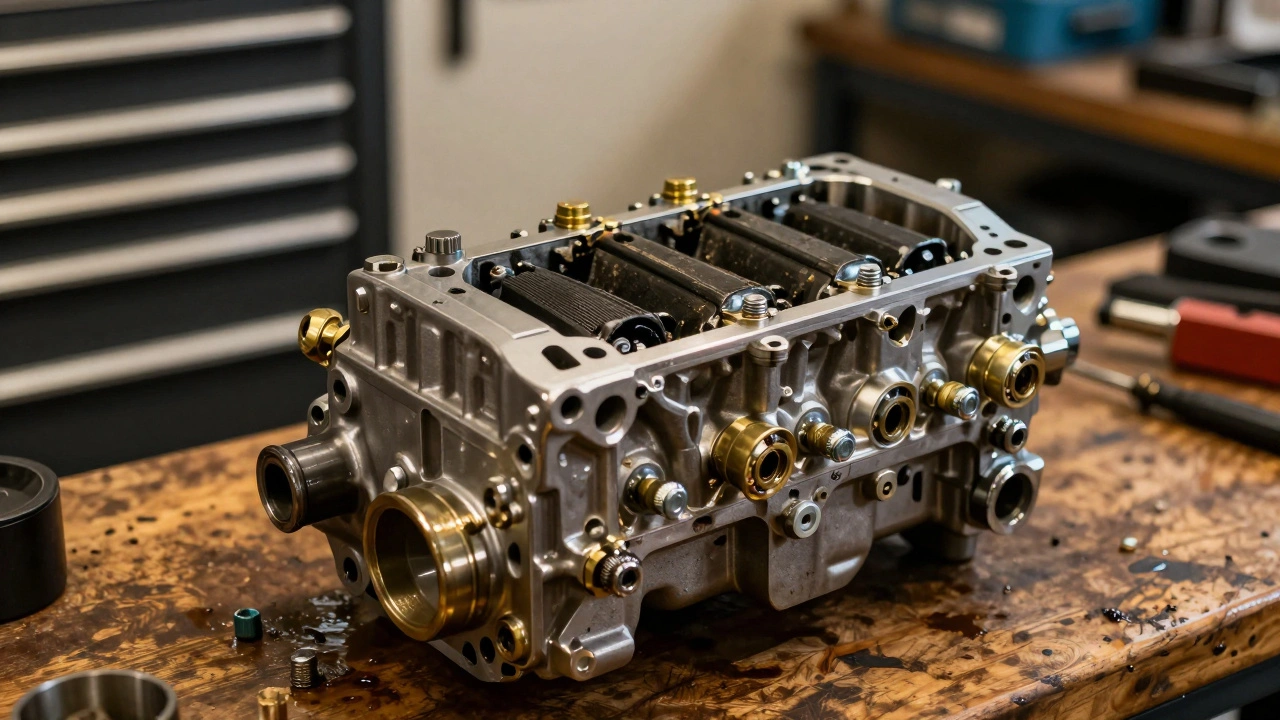
No discussion of BMC standardization ignores the B-Series Engine, an inline-four cylinder unit produced from 1953 until 1988. This powerplant became the heart of thousands of vehicles across various European marques. Its longevity proves that the strategy worked mechanically, not just financially. A robust, four-cylinder design replaced dozens of smaller, weaker units that plagued earlier production runs.
| Model Year | Car Model | Usage Type |
|---|---|---|
| 1959 | Austin Cambridge | Sedan/Saloon |
| 1962 | Morris Minor 1000 | Economy City Car |
| 1970 | Leyland P76 Van | Commercial Utility |
| 1977 | Morris Marina | Large Family Estate |
Notice the variety. From tiny city commuters to large station wagons, the B-Series powered them all. Engineers tuned the compression ratio slightly for different needs, but the block architecture remained constant. This modularity meant a workshop mechanic could repair a truck and a family sedan with the exact same spanner set. For the average buyer, this lowered maintenance barriers. You did not need specialized tools just to change oil filters; standard parts were available at every service station.
Critics sometimes argue that over-standardization leads to boring designs. While styling differences were subtle, performance variations emerged through tuning. The Cooper S version utilized a B-Series engine modified with triple carburetors, while the base model relied on single carburetion. The engine block stayed the same, ensuring reliability. This flexibility allowed BMC to offer entry-level pricing alongside performance variants without retooling the entire assembly line.
Impact on Family Car Accessibility
The ultimate goal of economies of scale is price reduction for the end-user. By buying steel in bulk and assembling standardized frames, BMC could keep sticker prices competitive against American and Japanese imports entering the market. This democratized car ownership in 1960s Britain. Families that previously relied on public transport gained personal mobility because mass-produced affordability lowered the barrier to entry.
However, there were trade-offs. When you engineer for volume, durability sometimes takes a backseat to assembly speed. Corrosion resistance on shared body panels often suffered because surface treatments were simplified to save time. Rust became a common enemy for many BMC survivors. If you own a classic from this era, you likely know the struggle of sourcing rust-proofing materials that match original specifications. Yet, despite these flaws, the sheer volume of surviving cars suggests that the fundamental durability was adequate for general use.
Maintenance became predictable. Owners manuals listed part numbers that appeared in multiple booklets. If an Austin owner lost a window winder gear, checking a Morris parts catalog revealed the solution immediately. This ecosystem extended beyond the factory gates to third-party suppliers. Independent manufacturers flooded the market with aftermarket parts designed for these common interfaces. Because so many people owned these cars, businesses saw profit in creating universal accessories, further driving down costs for the consumer.
Engineering Compromises and Long-Term Effects
Design teams operated under strict budgets. Every gram saved on a bracket contributed to the bottom line. While efficient, this mindset occasionally introduced weaknesses. The "over-square" configuration of some transmissions shared across heavy and light cars meant occasional reliability issues when heavier loads pushed limits. Engineers had to balance weight distribution carefully so that the drivetrain would handle the heaviest variant reliably. Sometimes, lighter cars felt underpowered simply because the transmission gearing prioritized heavier commercial variants.
Despite these compromises, the legacy remains visible today. Modern conglomerates like Volkswagen Group utilize similar platforms for Audi, Skoda, and VW models. Toyota's production system mirrors BMC's focus on supplier relationships and component flow. The philosophy of building a versatile chassis to host multiple body styles is still the industry standard. You see this when luxury SUVs and compact hatchbacks share the same suspension geometry.
The BMC experiment taught manufacturers that shared DNA builds resilience. When demand shifts from sedans to SUVs, a flexible platform allows quick adaptation. Without needing new factories, companies switch body mounts instead of rebuilding foundations. The B-Series engine and ADO platforms proved that standardization creates longevity. These parts outlasted the corporate entities that built them. Enthusiasts today still swap engines between decades-old models because the specification remains consistent.
The Evolution of Supply Chains
BMC's approach necessitated a robust supply chain network. Suppliers could produce in massive quantities because they knew exactly how many parts to cast. This predictability fostered better relationships between the automaker and its vendors. Vendors invested in better machinery knowing their orders were guaranteed for years. In turn, BMC received higher quality inputs at lower margins. It was a mutually beneficial cycle that stabilized the entire region's industrial economy.
As global markets opened up in the 1970s, foreign competition began to erode BMC's domestic dominance. Japanese manufacturers offered newer technology with equally efficient production. BMC eventually fragmented into the Rover Group, and later into MG Rover, before ceasing operations. Even after the brand dissolved, the principles lived on. Ford Europe and Fiat adopted similar consolidation strategies to survive global pressures. The concept of the 'common parts bin' transcended the collapse of specific companies.
Did parts sharing reduce car quality?
Not necessarily. While standardization allowed for faster assembly, it ensured proven components were reused. Quality depended more on material consistency than uniqueness. However, some cosmetic trim suffered as engineers focused on functional parts over aesthetics to meet budget targets.
What is the most common shared part?
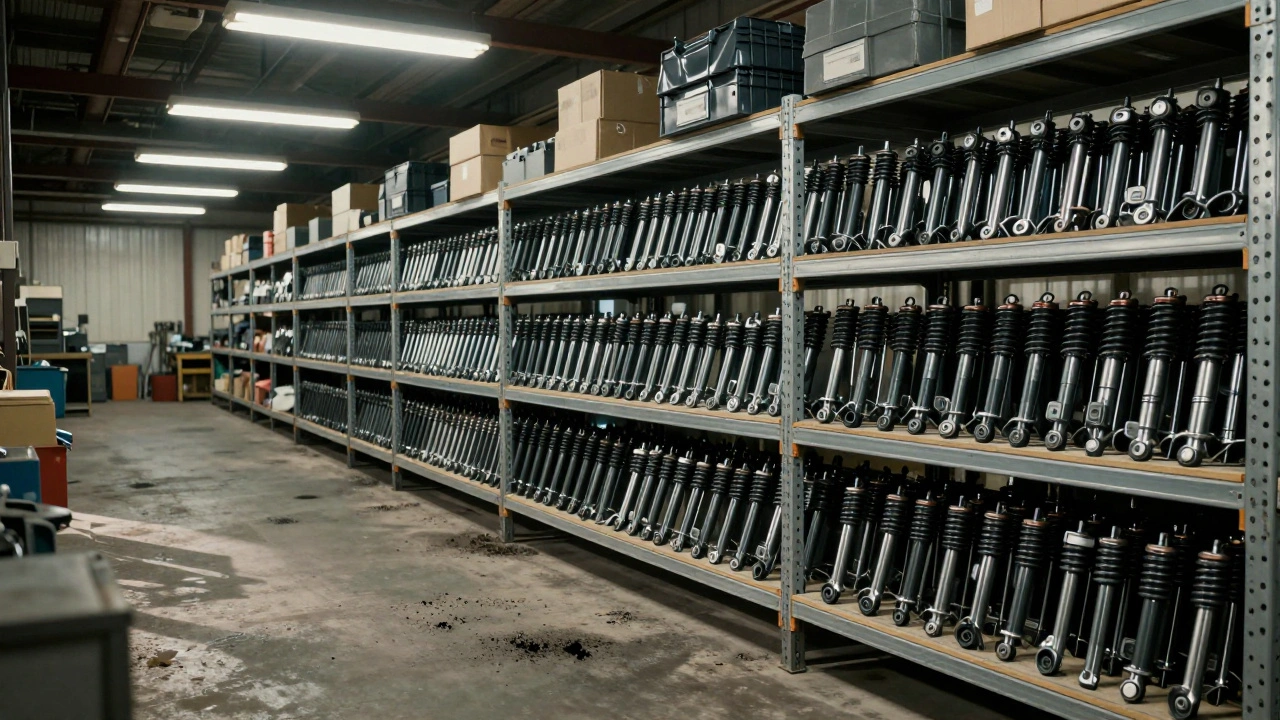
The B-Series engine is arguably the most famous example, appearing in hundreds of thousands of vehicles. Suspension struts, door handles, and instrument clusters were also heavily standardized across the Austin and Morris ranges during the 1960s.
How does this affect collectors today?
It makes restoration easier. Finding rare parts is possible because a larger pool of donor cars exists. If one model lacks a specific component, checking sibling models under the BMC umbrella often yields a usable replacement with minimal modification.
Are modern cars built on this principle?
Yes, extensively. Most automakers today use modular platforms where engines, wiring harnesses, and chassis rails are shared across different brands to maximize economies of scale and reduce development costs.
When did BMC officially stop production?
BMC was reorganized into British Motor Holdings in 1966 and eventually dissolved into British Leyland. The final remnants of the brand identity faded by the late 20th century, though the manufacturing techniques persisted through successor companies like Rover.