Argyll’s Four Wheel Brakes: The 1910 Safety Innovation That Changed Cars
 Oct, 7 2026
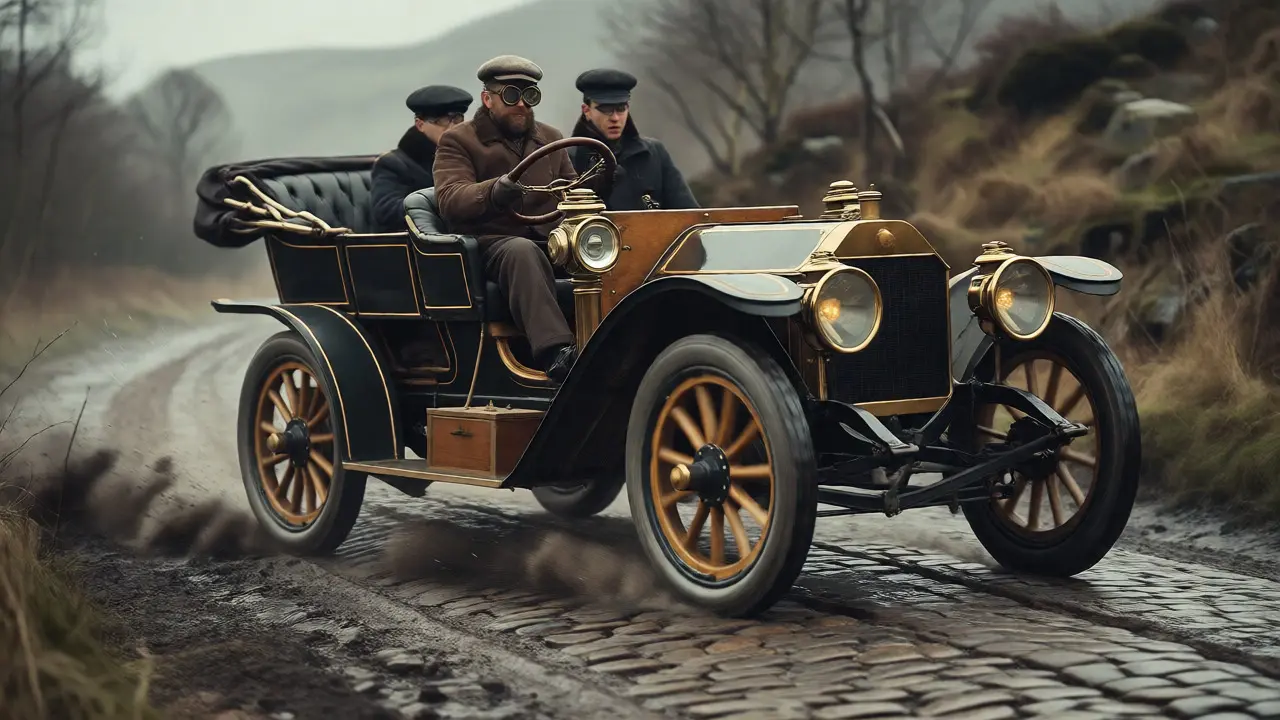
Imagine driving a car in 1910. You’re in an open-top tourer, the road is dirt or cobblestone, and there are no seatbelts, no airbags, and certainly no ABS. If you need to stop quickly, you pull a lever that engages a drum brake on just one axle-usually the rear. Your front wheels? They keep rolling, often causing the car to skid sideways or spin out if you hit the gas too hard while turning. This was the standard for decades. Then, in 1910, a Scottish engineer named Argyll changed everything by introducing four-wheel brakes on production cars. It sounds obvious now, but back then, it was a radical departure from accepted engineering wisdom. Why did this specific innovation matter so much, and how did it reshape the entire trajectory of car engineering?
The Dangerous Status Quo of Early Motoring
To understand why Argyll’s move was revolutionary, you have to look at what came before. In the early 1900s, most manufacturers believed that braking only the rear wheels was sufficient. The logic was flawed but common: they thought locking the front wheels would cause a loss of steering control, making the car undriveable. So, they left the fronts alone. But this created a different problem. When you braked hard, weight transferred forward, lifting the rear end off the ground. With less weight on the rear tires, grip dropped dramatically. The result? A dangerous tendency for the rear of the car to slide out, especially on wet roads or during emergency stops. Drivers had to rely on skill and luck rather than reliable mechanics.
This wasn't just a minor inconvenience; it was a major safety hazard. Accidents were frequent, and the public perception of automobiles as "dangerous toys" persisted partly because stopping them was so unpredictable. Manufacturers knew something needed to change, but few dared to challenge the convention. That is until Argyll Motors, based in Alexandria, Scotland, decided to prove the skeptics wrong.
How Argyll Cracked the Code
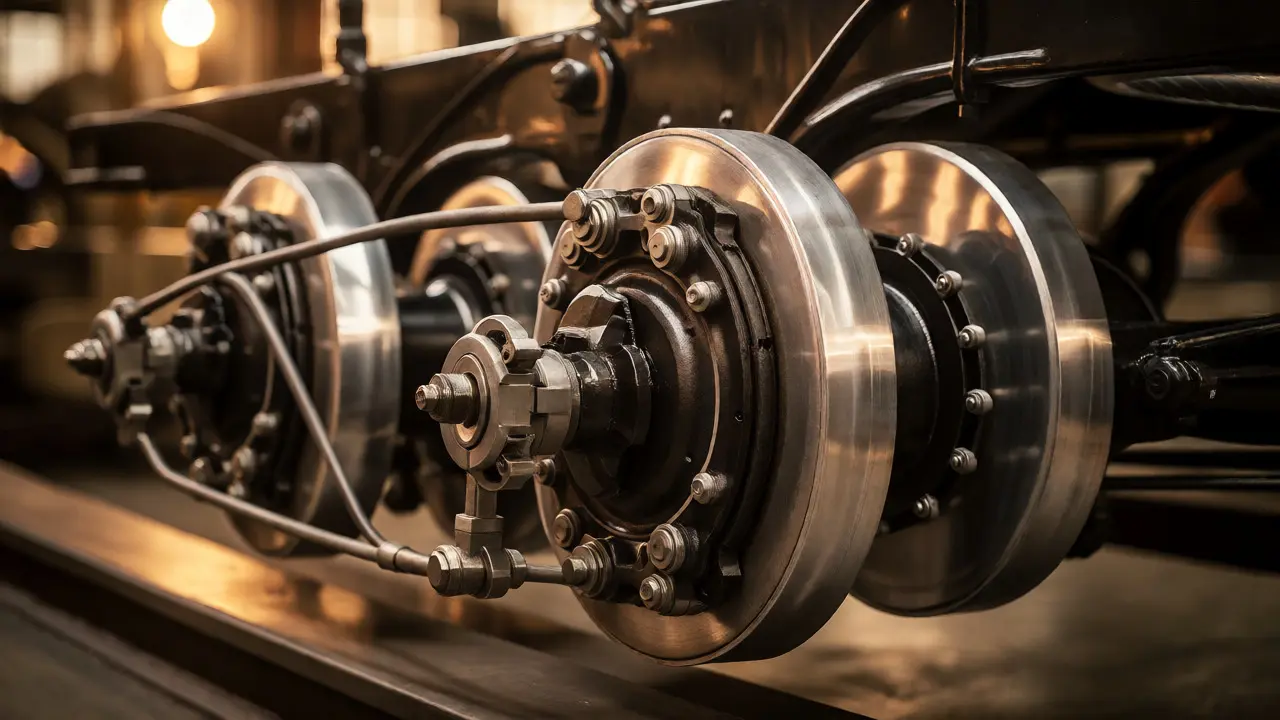
Argyll didn’t just slap brakes on the front wheels and hope for the best. They engineered a system that addressed the core issue: balance. Their approach involved using cable-operated drums on all four wheels, but with careful attention to the leverage and actuation force. By applying braking force to the front wheels, which naturally carry more weight under deceleration, they achieved significantly better stopping power. More importantly, they maintained steering control because the front tires were still gripping the road surface, even while slowing down.
This might seem simple today, but in 1910, it required precise calculation. Too much force on the fronts could lock them up, causing the same loss of steering they feared. Argyll’s solution was a balanced distribution that allowed drivers to stop shorter distances without losing directional stability. It proved that the fear of front-wheel lockup was manageable with proper engineering. This success gave other manufacturers the confidence to follow suit, marking the beginning of the end for single-axle braking.
The Ripple Effect on Automotive Design
The introduction of four-wheel brakes didn’t happen in a vacuum. It forced designers to rethink other aspects of the vehicle. For instance, suspension systems had to evolve. As braking forces increased, the chassis experienced more stress. Engineers began designing stronger frames and more sophisticated suspensions to handle the additional loads. Tires also became critical components. Better brakes meant higher speeds were safer, which led to demands for better tire compounds and tread patterns to maintain grip under heavy deceleration.
This shift also influenced driver training. Driving manuals started emphasizing the importance of smooth pedal application rather than jerky pulls on a hand lever. The transition from hand-brake-only operation to foot-pedal systems (which became standard shortly after) made driving more intuitive and accessible. Suddenly, cars weren’t just faster; they were controllable. This accessibility helped expand the market beyond wealthy enthusiasts to the emerging middle class, fueling the growth of the automotive industry in the 1910s and 1920s.
Why Other Manufacturers Hesitated
If four-wheel brakes were so superior, why didn’t every car maker adopt them immediately? Cost and complexity were significant barriers. Adding brakes to the front wheels meant more parts, more assembly time, and higher maintenance requirements. Many companies argued that their existing systems were "good enough" for the average driver who rarely exceeded 30 mph. There was also inertia in the industry; changing established designs required retooling factories and retraining workers.
However, accidents don’t care about cost savings. As speeds increased due to improved engines, the limitations of rear-only braking became undeniable. High-profile incidents involving skidding cars pressured manufacturers to improve safety features. By the mid-1920s, four-wheel brakes had become a standard expectation rather than a luxury feature. Companies like Ford and General Motors eventually adopted them across their lines, cementing Argyll’s legacy as a pioneer whose idea became universal.
Legacy in Modern Engineering
Today, we take anti-lock braking systems (ABS) and electronic stability control for granted. But these modern marvels build directly on the foundation laid by Argyll in 1910. Without four-wheel brakes, there would be no basis for ABS to modulate pressure individually on each wheel. The very concept of independent wheel control starts with having brakes on all four corners.
Moreover, the debate over brake bias-the ratio of braking force between front and rear axles-is still central to performance tuning. Race engineers spend countless hours adjusting this balance to optimize lap times and safety. Every time you press your brake pedal today, you’re benefiting from a century of refinement that began when a small Scottish company decided to question the status quo.
| Feature | Rear-Wheel Only (Pre-1910) | Four-Wheel Brakes (Post-1910) |
|---|---|---|
| Stopping Distance | Longer, inconsistent due to weight transfer | Shorter, more predictable |
| Steering Control | Maintained, but risk of rear skid | Improved, prevents lateral sliding |
| Complexity | Low, fewer parts | Higher, requires balanced linkage |
| Safety Rating | Low for high-speed scenarios | Significantly improved |
Frequently Asked Questions
Did Argyll invent four-wheel brakes?
Not exactly. While earlier experimental vehicles had used four-wheel braking, Argyll Motors was among the first to implement it effectively and reliably in mass-produced touring cars around 1910. Their contribution was proving its practical viability and safety benefits to the broader market, prompting widespread adoption.
Why were rear-only brakes considered safe initially?
Engineers feared that locking the front wheels would cause a total loss of steering, making the car uncontrollable. Since most cars operated at low speeds, they believed the risk of rear skidding was acceptable compared to the perceived danger of front lockup. This assumption failed as speeds increased.
How did four-wheel brakes affect car design?
They necessitated stronger chassis structures to handle increased braking forces and led to improvements in suspension and tire technology. It also drove the development of hydraulic braking systems later on, as mechanical linkages became too complex and prone to wear.
Is Argyll Motors still in business?
No, the original Argyll Motors company ceased operations in the 1930s. However, its historical significance remains prominent in automotive heritage circles, particularly in Scotland where it was founded.
When did four-wheel brakes become standard in all cars?
By the late 1920s, four-wheel brakes had become a standard feature on most new passenger vehicles in Europe and North America, driven by both consumer demand for safety and regulatory pressures.