Alec Issigonis Design Philosophy: Comfort, Space, and Affordability
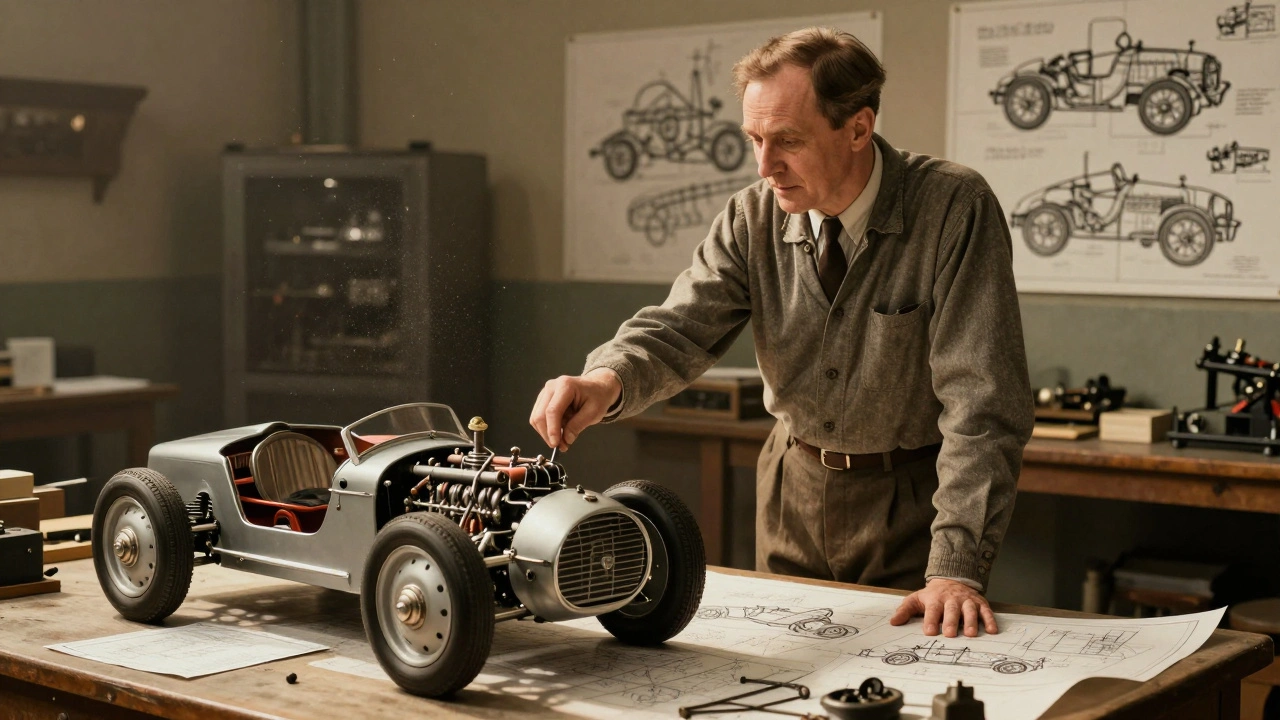 May, 10 2026
Imagine a car that fits into a parking space half the size of a standard sedan, seats four adults comfortably, and costs less than your weekly grocery bill. Sounds impossible? Not to Alec Issigonis, the Greek-born British automotive engineer who redefined personal mobility with the Mini. His design philosophy wasn’t just about making small cars; it was about democratizing freedom through engineering brilliance. Today, we explore how Issigonis balanced comfort, space, and affordability to create one of the most influential vehicles in history.
The Core Problem: Making Cars Accessible
In the 1950s, Britain faced a fuel crisis after the Suez War. Gasoline prices skyrocketed, and people needed efficient transportation. Most manufacturers responded by making smaller versions of existing large cars-inefficient compromises that didn’t solve the real problem. Issigonis saw an opportunity. He believed that true innovation meant starting from scratch, not shrinking old designs. His goal was simple yet radical: build a practical, affordable car for the masses without sacrificing quality or style.
This approach required rethinking every aspect of automotive design. Traditional layouts wasted valuable interior space on drivetrain components. By placing the engine transversely (sideways) and using front-wheel drive, Issigonis freed up floor space for passengers. This layout became known as the "Mini formula" and remains foundational in modern compact car design.
Space Efficiency Through Radical Engineering
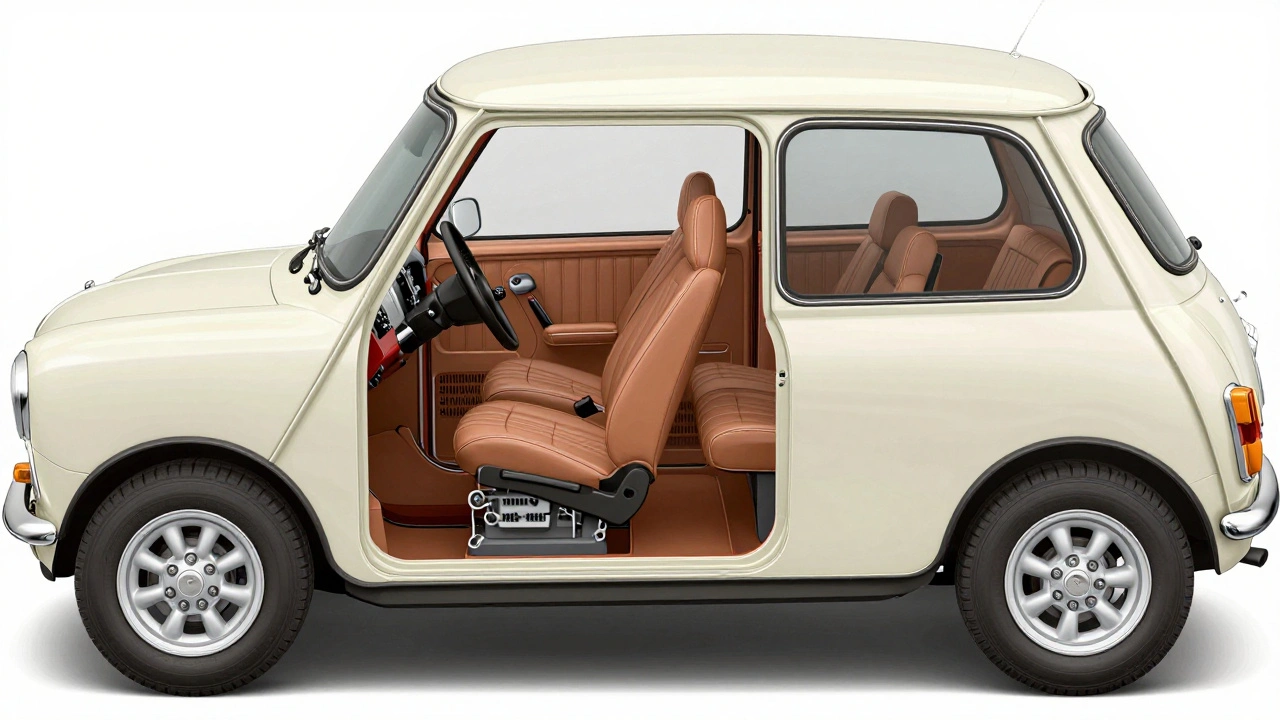
How do you fit four people into a car under 10 feet long? Issigonis solved this puzzle with ingenious packaging solutions. The Mini, a subcompact car produced by the British Motor Corporation from 1959 to 2000 featured a flat floor thanks to its transverse engine placement. Unlike rear-wheel-drive cars where the driveshaft runs down the middle, creating a hump, the Mini offered unobstructed legroom.
- Transverse Engine Layout: Placing the engine sideways allowed for shorter overall length while maintaining cabin volume.
- Wheel Placement: Wheels were positioned at extreme corners, maximizing wheelbase-to-length ratio.
- Compact Components: Even details like door hinges and seat mechanisms were miniaturized without compromising durability.
These choices weren't arbitrary-they followed strict geometric principles. Issigonis calculated that optimal efficiency came when 80% of the car's footprint served passenger space rather than mechanical systems. For context, typical sedans of the era achieved only 60-70% efficiency. This mathematical precision enabled the Mini to offer surprisingly spacious interiors despite its tiny exterior dimensions.
Affordability Without Compromise
Making something cheap often means cutting corners-but Issigonis refused to accept lower quality as inevitable. Instead, he focused on smart manufacturing processes. The Mini used standardized parts across multiple models within the BMC group, reducing production costs significantly. Additionally, simplified assembly lines meant fewer labor hours per vehicle.
| Feature | Mini (1959) | Austin A30 | Ford Anglia |
|---|---|---|---|
| Price (£) | £299 | £345 | £379 |
| Interior Volume (cu ft) | 52 | 48 | 55 |
| Fuel Economy (mpg) | 55+ | 35 | 38 |
Notice how the Mini delivered superior value-not just because it cost less upfront, but also due to lower running expenses. Its lightweight construction reduced wear on brakes and tires, while excellent fuel economy saved owners money over time. These factors combined made ownership genuinely accessible to working-class families who previously couldn't afford reliable transport.
Comfort Redefined for Small Packages
You might assume squeezing everything into such a small package would result in discomfort. Surprisingly, Issigonis prioritized ergonomics even in constrained spaces. Seats were designed with proper lumbar support, steering wheels adjusted easily, and controls placed intuitively. Even minor touches mattered-like ensuring visibility remained good despite low seating positions.
One clever solution involved suspension tuning. Rather than stiff springs common in budget cars, Issigonis opted for softer setups that absorbed road imperfections better. Combined with narrow track widths, this gave the Mini stable handling characteristics rarely seen in economical vehicles. Drivers reported feeling connected to their surroundings without being jostled excessively-a balance crucial for daily usability.

Legacy Beyond the Mini
The impact of Issigonis’ work extends far beyond his original creation. Modern hatchbacks owe much of their success to concepts pioneered during development of the Mini. Front-wheel-drive configurations dominate today’s market precisely because they maximize interior utility relative to external size. Even luxury brands now incorporate similar packaging strategies in entry-level offerings.
Moreover, environmental awareness has renewed interest in efficient urban mobility. As cities grow denser globally, there’s increasing demand for vehicles that navigate tight streets efficiently while providing adequate comfort. Electric variants continue emerging regularly, proving Issigonis' vision remains relevant decades later. In fact, recent studies show electric adaptations achieve up to 40 miles range per kWh consumed-remarkable considering battery technology limitations.
Lessons for Contemporary Designers
What can current engineers learn from Issigonis? First, never compromise core functionality for aesthetic trends alone. Second, embrace constraints creatively instead of viewing them purely negatively. Finally, always consider total cost of ownership alongside initial purchase price when targeting mass markets.
Consider Tesla Model 3 versus traditional SUVs. While larger vehicles dominate sales figures temporarily, smaller EVs consistently outperform regarding charging speed and parking convenience. Applying Issigonis-style thinking could yield breakthroughs in shared mobility services too-imagine fleets optimized specifically around human-scale needs rather than brute force capacity metrics.
Why did Alec Issigonis choose front-wheel drive?
Front-wheel drive eliminated the need for a central driveshaft tunnel, freeing up valuable interior space. It also improved traction since weight distribution favored driven wheels more effectively than rear-wheel alternatives.
Was the Mini truly affordable compared to other cars?
Yes, initially priced at £299, it undercut competitors substantially. More importantly, low maintenance requirements and exceptional fuel economy ensured long-term savings outweighed any perceived drawbacks.
How does Issigonis influence modern automotive design?
His emphasis on maximizing interior volume relative to exterior dimensions established standards still followed today. Many contemporary compact cars utilize transverse engine layouts directly inspired by his innovations.
Did Issigonis face resistance implementing new ideas?
Initially yes, industry skeptics doubted viability of radically different approaches. However, overwhelming consumer adoption quickly silenced critics and validated unconventional methods employed throughout development process.
Can these principles apply outside automobiles?
Absolutely. Any product requiring efficient use of limited resources benefits from similar mindset. Smartphones, laptops, wearable tech-all share fundamental challenge balancing performance capabilities against physical constraints.